How to Begin Your Artistic Journey: A Beginner's Guide to Drawing
How to Begin Your Artistic Journey: A Beginner's Guide to Drawing
Hello, fellow creative explorer! Do you feel that irresistible itch to capture the world, to translate the swirling visions in your mind onto paper? If so, welcome! You've stumbled upon the perfect starting point for your artistic adventure. Drawing, at its heart, is about seeing, feeling, and translating that experience into a visual language. It's a journey of self-discovery, observation, and endless possibilities. So, grab your pencil, open your mind, and let's embark on this exciting quest together!
This isn't just a technical guide; it's an invitation to embrace your inner artist. It's a call to silence the inner critic and listen to the whisper of your creative spirit. We'll cover the basics, yes, but more importantly, we'll nurture your imagination and help you find the joy in the process.
The Essential Toolkit: Gathering Your Creative Arsenal

Before we dive into techniques, let's gather our supplies. Don't feel like you need to break the bank – a few simple tools are all you need to start. The most important ingredient is your enthusiasm!
1. Pencils: Your Loyal Companions
Start with a basic set of graphite pencils. Look for a range of hardness, typically labeled with "H" (for hard) and "B" (for soft). A good starting point is:
- 2H: For light sketching and outlining. It creates light, thin lines that are easy to erase.
- HB: A versatile pencil that's good for general drawing and shading. It's a happy medium.
- 2B: For darker lines and shading. It allows for richer, more expressive marks.
- 4B or 6B: These are your shading powerhouses! Use them for deep shadows and dramatic effects. They lay down dark, velvety lines.
2. Paper: Your Canvas of Dreams
Choose a sketchbook or drawing pad that feels good in your hands. Look for paper with a slightly textured surface (also known as "tooth"). This helps the pencil grip the paper and creates a richer range of tones. Avoid super-smooth paper at first, as it can be slippery and difficult to control.
3. Erasers: Your Agents of Change
A good eraser is essential for correcting mistakes and creating highlights. Here are a couple of options:
- Kneaded Eraser: This is like putty and can be molded into different shapes. Perfect for lifting graphite and creating subtle highlights without damaging the paper.
- Pink or White Eraser: For more precise erasing and cleaning up edges.
4. Sharpener: Keeping Your Points Precise
A good pencil sharpener is crucial for maintaining a sharp point, which is essential for detail work. A handheld sharpener or a small electric sharpener will do the trick.
5. Optional Extras (But Highly Recommended!):
- Blending Stump or Tortillon: These paper tools are great for blending graphite and creating smooth transitions.
- Ruler: Useful for drawing straight lines and geometric shapes.
- Drawing Board or Clipboard: Provides a stable surface to work on.
The Building Blocks: Fundamental Drawing Techniques

Now that we have our tools, let's explore some fundamental techniques that will form the foundation of your drawing skills. Remember, practice makes progress, not perfect! Don't be afraid to experiment and have fun.
1. Line Work: The Language of Form
Lines are the backbone of drawing. They define shapes, create outlines, and suggest movement. Experiment with different types of lines:
- Straight Lines: Use a ruler or practice drawing them freehand. Focus on control and consistency.
- Curved Lines: Practice drawing smooth, flowing curves. Imagine drawing a ribbon or a wave.
- Varying Line Weight: Experiment with pressing harder or lighter on your pencil to create thicker or thinner lines. This adds depth and interest to your drawings. Think about how line weight can suggest light and shadow. A heavier line on the shadow side, for instance, can really make an object pop.
2. Shapes: The Foundation of Everything
Everything you see can be broken down into basic shapes: circles, squares, triangles, rectangles, and ellipses. Practice drawing these shapes accurately and consistently. Start by observing real-world objects and identifying the underlying shapes.
3. Shading: Adding Depth and Dimension
Shading is what gives your drawings form and volume. It's the art of using light and shadow to create the illusion of three dimensions on a two-dimensional surface.
- Hatching: Creating tones by drawing parallel lines. The closer the lines, the darker the tone.
- Cross-Hatching: Layering hatching lines in different directions to create darker values.
- Stippling: Creating tones by using dots. The denser the dots, the darker the tone. This is a great technique for creating textures!
- Blending: Using a blending stump or your finger to smooth out graphite and create smooth transitions between tones.
4. Perspective: Creating the Illusion of Depth
Perspective is the technique of representing three-dimensional objects on a two-dimensional surface to create the illusion of depth and distance. It can seem daunting at first, but mastering basic perspective will dramatically improve your drawings.
- One-Point Perspective: All parallel lines converge at a single vanishing point on the horizon line. This is useful for drawing roads, hallways, and other scenes with a strong sense of depth.
- Two-Point Perspective: Parallel lines converge at two vanishing points on the horizon line. This is useful for drawing buildings and other objects seen from an angle.
- Three-Point Perspective: Adds a third vanishing point, usually above or below the horizon line, to create a more dramatic and dynamic perspective. This is often used for drawing very tall buildings or scenes viewed from an extreme angle.
What to Draw: Finding Your Muse
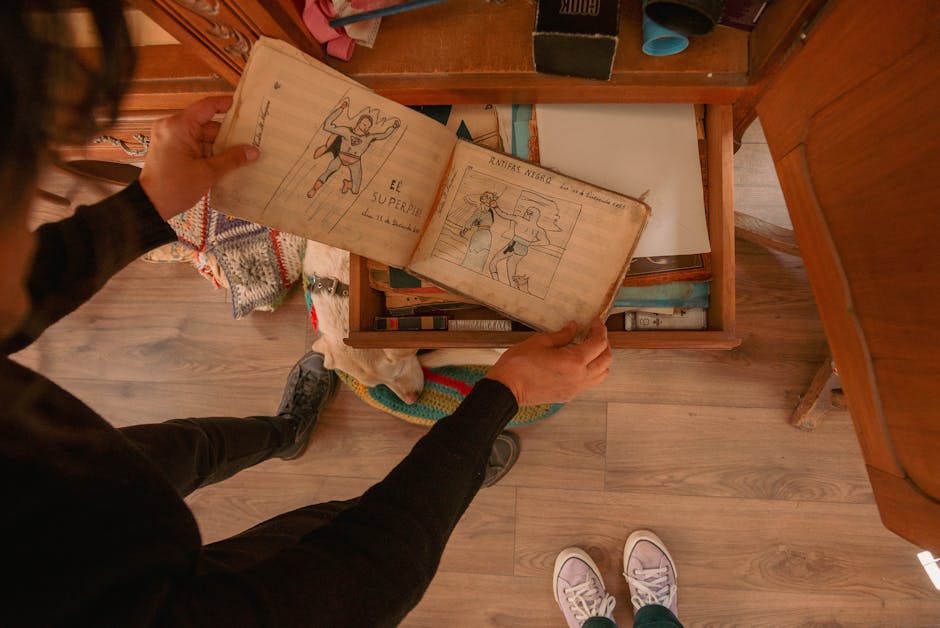
Now that you have some basic techniques under your belt, the question becomes: what should you draw? The answer is anything and everything! The most important thing is to draw regularly and to draw things that interest you.
Here are some ideas to get you started:
- Still Life: Arrange a collection of objects (fruits, vegetables, vases, etc.) and draw them from life. This is a great way to practice observation and shading.
- Nature: Draw plants, trees, flowers, landscapes, animals, and anything else you find in nature. The natural world is a boundless source of inspiration.
- Portraits: Start by drawing simple portraits of yourself or your friends and family. Focus on capturing the basic shapes and proportions of the face.
- Objects Around You: Draw everyday objects that you see around you: a coffee cup, a book, a chair, a lamp. Paying attention to the details of the ordinary can be surprisingly rewarding.
- From Photographs: Drawing from photographs is a great way to practice your skills when you don't have access to real-life subjects. However, try to avoid simply copying the photograph; instead, use it as a reference and try to interpret the subject in your own way.
- From Your Imagination: Let your imagination run wild and draw whatever comes to mind! This is where you can truly express your creativity and develop your own unique style. Draw fantastical creatures, dreamlike landscapes, or abstract compositions.
Overcoming Creative Blocks: Finding Your Flow
Everyone experiences creative blocks from time to time. It's perfectly normal to feel stuck or uninspired. The key is to not give up! Here are a few tips for overcoming creative blocks:
- Change Your Environment: Sometimes a change of scenery can be all it takes to break through a creative block. Try drawing in a different room, outside, or in a coffee shop.
- Try a Different Medium: Experiment with different drawing tools, such as charcoal, colored pencils, or even digital art software.
- Take a Break: Sometimes the best thing you can do is to step away from your drawing for a while and do something completely different. Go for a walk, listen to music, read a book, or spend time with friends and family.
- Practice Mindful Observation: Focus your attention on the details of the world around you. Notice the colors, textures, shapes, and patterns. This can help to spark your imagination and give you new ideas for your drawings.
- Set Small, Achievable Goals: Instead of trying to create a masterpiece, focus on completing small, manageable tasks. For example, you could set a goal to draw for 15 minutes each day, or to draw one new object each week.
- Don't Be Afraid to Experiment: Try new techniques, styles, and subjects. Don't be afraid to make mistakes; they are a part of the learning process. The point is to learn and develop your skills.
Embrace the Journey: The Path to Artistic Growth

Learning to draw is a journey, not a destination. There will be times when you feel frustrated or discouraged, but it's important to remember why you started in the first place: because you love to create! Embrace the challenges, celebrate your progress, and never stop learning.
1. Practice Regularly: The more you draw, the better you will become. Aim to draw for at least a few minutes each day, even if it's just a quick sketch. Consistency is key.
2. Seek Feedback: Share your work with others and ask for constructive criticism. Be open to suggestions and use them to improve your skills. Online art communities can be a great source of feedback and support.
3. Study the Masters: Look at the work of great artists throughout history and learn from their techniques and styles. Visit museums, browse art books, and explore online art galleries.
4. Be Patient: Learning to draw takes time and effort. Don't get discouraged if you don't see results immediately. Just keep practicing and you will gradually improve your skills.
5. Find Your Style: As you develop your skills, you will start to develop your own unique style. This is the way that you express yourself through your art. Don't try to copy someone else's style; instead, focus on developing your own voice.
6. Have Fun! Drawing should be enjoyable. Don't take it too seriously and don't be afraid to experiment and make mistakes. The most important thing is to have fun and to express your creativity.
So, go forth, my creative friend! Embrace the journey, trust your instincts, and let your imagination soar. The world awaits your artistic vision!
Post a Comment