How to Start Drawing: A Beginner's Journey into Artful Expression
How to Start Drawing: A Beginner's Journey into Artful Expression
So, you've felt the itch. That persistent little nudge in your soul whispering, "Draw something! Create!" Wonderful! Welcome to the magical, sometimes messy, but always rewarding world of drawing. It's a universe where imagination blossoms, where lines dance across the page, and where you, yes you, can conjure beauty from thin air. Don't be intimidated by galleries full of masterpieces or intimidated by those Instagram artists who seem to effortlessly produce stunning works. Everyone starts somewhere. And this, my friend, is your starting point. Let's embark on this adventure together!
The Foundation: Essential Tools and Mindset

Before we even think about shading techniques or perspective, let's gather our supplies and, more importantly, cultivate the right mindset. Drawing isn't about innate talent; it's about practice, observation, and a willingness to embrace imperfection.
1. Gathering Your Artistic Arsenal:
You don't need a studio full of expensive materials to begin. Start simple. Here's what I recommend:
- Pencils: A set of graphite pencils ranging from 2H to 6B is a great starting point. The "H" pencils are harder and create lighter lines, while the "B" pencils are softer and produce darker, richer marks. A simple #2 pencil will work too!
- Paper: Don't use just any paper. A sketchbook with slightly textured paper (often called "drawing paper") will grab the graphite better than smooth printer paper.
- Eraser: A kneaded eraser is your best friend. It can be molded into different shapes to erase precisely or gently lift graphite to create subtle highlights.
- Sharpener: A good quality sharpener will keep your pencils ready for action.
- Optional Extras: A blending stump (also called a tortillon) for smoother shading, and a ruler for straight lines (although freehand is often more fun!).
2. Cultivating the Beginner's Mind:
This is arguably more important than the tools. Embrace the following principles:
- Forget Perfection: Seriously, ditch it. The most charming drawings often have quirks and imperfections. Focus on the process, not the perfect outcome.
- Embrace Experimentation: Try different techniques, materials, and subjects. See what resonates with you. There are no rules!
- Practice Regularly: Even 15 minutes a day is better than a marathon session once a week. Consistency is key to developing your skills.
- Observe the World: Really look at things. Pay attention to shapes, light, shadow, texture, and color. The more you observe, the more you'll have to draw.
- Be Patient: Drawing is a skill that develops over time. Don't get discouraged if your first attempts aren't masterpieces. Keep practicing, and you'll see progress.
First Strokes: Basic Drawing Exercises
Now that we're armed with supplies and a positive attitude, let's dive into some fundamental exercises that will help you develop your hand-eye coordination and understanding of basic shapes.
1. The Line Dance:
Sounds silly, right? But mastering line control is crucial. Fill a page with different types of lines:
- Straight Lines: Practice drawing straight lines of varying lengths and thicknesses. Focus on maintaining a consistent pressure.
- Curved Lines: Explore curves of different radii. Try drawing spirals, waves, and organic shapes.
- Crosshatching: Create tonal variations by layering lines that intersect. This is a fundamental shading technique.
2. Shape Shifting:
Everything you see can be broken down into basic geometric shapes: circles, squares, triangles, rectangles, and cylinders. Practice drawing these shapes accurately.
- Circles: A perfect circle is surprisingly challenging. Try drawing circles freehand, focusing on maintaining a consistent distance from the center.
- Squares and Rectangles: Pay attention to the angles. Ensure that your corners are square and your sides are parallel.
- Triangles: Experiment with different types of triangles: equilateral, isosceles, and scalene.
- Cylinders: Imagine a can or a tube. Practice drawing cylinders from different angles, paying attention to the perspective of the elliptical ends.
3. Contour Drawing:
Contour drawing is a fantastic exercise for improving your observation skills and developing a sense of form. The goal is to draw the outline (contour) of an object without lifting your pencil from the paper. Don't worry about shading or detail; just focus on capturing the shape.
- Choose a simple object, like a fruit or a leaf.
- Place the object in front of you and observe it carefully.
- Start drawing the outline of the object, slowly and deliberately. Try not to look at your paper too much; focus on the object.
- Don't worry about mistakes; just keep drawing.
Light and Shadow: Bringing Depth to Your Drawings

Understanding light and shadow is essential for creating realistic and compelling drawings. It's what gives your drawings depth and dimension.
1. Understanding Light Sources:
Where is the light coming from? This is the first question you should ask yourself when you're drawing. The direction of the light will determine the placement of highlights and shadows.
2. The Five Elements of Light:
These are the different areas of light and shadow on an object:
- Highlight: The brightest part of the object, where the light hits directly.
- Light Tone: The area surrounding the highlight, which is still relatively bright but less intense.
- Midtone: The middle value, representing the majority of the object's surface.
- Shadow: The area that is not directly illuminated by the light source.
- Reflected Light: A subtle area of light within the shadow, caused by light bouncing off nearby surfaces.
- Cast Shadow: The shadow that the object casts onto the surrounding surface.
3. Shading Techniques:
Experiment with different shading techniques to create tonal variations:
- Hatching: Creating tonal variations by drawing parallel lines. Closer lines create darker values, while more spaced lines create lighter values.
- Crosshatching: Similar to hatching, but with lines that intersect. This allows for greater control over tonal values.
- Stippling: Creating tonal variations by using dots. Denser dots create darker values, while sparser dots create lighter values.
- Blending: Smudging the graphite to create smooth transitions between tonal values. You can use a blending stump, your finger (though that's messier!), or a piece of tissue.
4. Value Scales:
A value scale is a chart that shows a range of tonal values from white to black. Creating a value scale is a great way to practice your shading techniques and develop your understanding of value.
Composition: Arranging Elements for Visual Impact

Composition is the arrangement of elements within a drawing. A strong composition can make a drawing more visually appealing and engaging. It's about guiding the viewer's eye and creating a sense of harmony.
1. The Rule of Thirds:
Divide your drawing surface into nine equal parts by drawing two horizontal and two vertical lines. Place important elements along these lines or at their intersections. This creates a more dynamic and visually interesting composition.
2. Leading Lines:
Use lines to guide the viewer's eye through the drawing. Leading lines can be literal lines, like roads or fences, or they can be implied lines, created by the arrangement of objects.
3. Negative Space:
Pay attention to the space around the objects in your drawing. Negative space can be just as important as the positive space (the objects themselves). It can help to define the shapes of the objects and create a sense of balance.
4. Focal Point:
Every drawing should have a focal point, which is the area that draws the viewer's eye first. You can create a focal point by using contrast, color, or placement.
Finding Your Style: Exploring Different Subjects and Techniques

As you continue to practice, you'll start to develop your own unique style. Don't be afraid to experiment with different subjects, techniques, and materials.
1. Drawing from Life:
Drawing from life is the best way to improve your observation skills and develop your understanding of form. Draw everyday objects, landscapes, portraits, and figures. The more you draw from life, the more comfortable you'll become with capturing the world around you.
2. Drawing from Photographs:
Drawing from photographs can be a helpful tool for practicing specific techniques, such as shading or perspective. However, be careful not to rely on photographs too much, as they can flatten the image and make it difficult to understand the form.
3. Exploring Different Subjects:
Draw everything! Flowers, animals, portraits, landscapes, still lifes, buildings, and even abstract designs. The more you experiment, the more you'll discover what you enjoy drawing and what you're good at.
4. Trying Different Techniques:
Explore different drawing techniques, such as charcoal, pen and ink, colored pencils, and watercolor pencils. Each medium has its own unique properties and will allow you to create different effects.
Keeping the Creative Flame Alive: Staying Inspired and Motivated
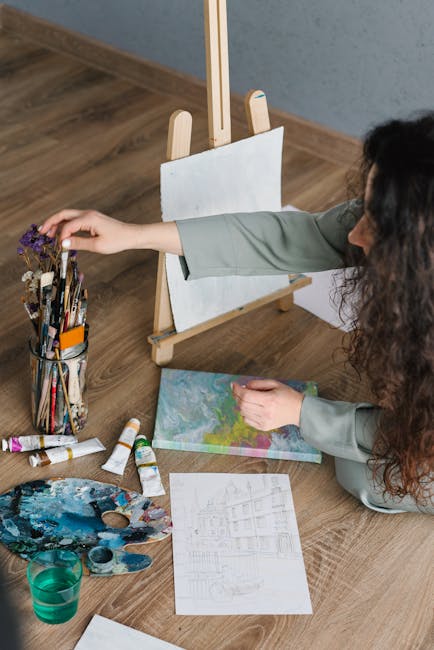
The most important thing is to keep drawing! Find ways to stay inspired and motivated. Drawing should be a joy, not a chore.
1. Join a Drawing Group:
Drawing with other people can be a great way to learn new techniques, get feedback on your work, and stay motivated. There are many online drawing groups and communities, as well as local art classes and workshops.
2. Visit Art Galleries and Museums:
Looking at the work of other artists can be incredibly inspiring. Visit art galleries and museums, both in person and online, to see what other artists are creating. Pay attention to the techniques they use, the subjects they choose, and the overall composition of their work.
3. Keep a Sketchbook:
Carry a sketchbook with you wherever you go and use it to jot down ideas, practice your drawing skills, and capture interesting scenes. A sketchbook is a great way to document your artistic journey and to experiment with new ideas.
4. Set Goals and Challenges:
Set yourself realistic goals and challenges to help you stay on track. For example, you could challenge yourself to draw one thing every day for a month, or to learn a new drawing technique each week. This can help to keep you motivated and to track your progress.
5. Most Importantly: Have Fun!
Drawing should be a joyful and rewarding experience. Don't take yourself too seriously, and don't be afraid to experiment and make mistakes. The most important thing is to enjoy the process and to keep creating.
So go forth, my friend, and draw! Let your imagination soar, and let your creativity flow. The world is waiting to see what you'll create. Happy drawing!
Post a Comment