How to Start Drawing: A Beginner's Journey into the World of Art
How to Start Drawing: A Beginner's Journey into the World of Art
Ah, drawing. The very word conjures images of charcoal-smudged fingers, crisp paper whispering under a pencil's lead, and the magical act of bringing imagination to life. If you've ever felt a pull towards this captivating world but felt unsure where to begin, fear not, dear friend! This is your portal, your gentle nudge into the vibrant realm of art.
I remember the first time I truly felt the thrill of drawing. It wasn't about perfection or replicating reality. It was about seeing the world through a different lens, translating my observations and emotions onto a page. And that's what I want to share with you – the joy of the process, the freedom of expression, and the simple magic of creating.
Embrace the Blank Page: Dispelling the Myths

Before we dive into techniques and tools, let's address some common myths that often hold aspiring artists back. The biggest one? "I'm not talented enough." Throw that thought right out the window! Drawing is a skill, like any other, that improves with practice and patience. Talent may play a role, but dedication and a willingness to learn are far more crucial.
Another myth is that you need expensive materials to start. Absolutely not! A simple pencil and paper are all you need to begin your artistic adventure. Don't let the allure of fancy equipment deter you. Focus on the fundamentals, and the fancy stuff can come later.
Finally, forget about perfection. Drawing is not about creating flawless replicas. It's about expressing yourself, exploring your creativity, and enjoying the journey. Embrace mistakes as learning opportunities. Every line, every smudge, every imperfection contributes to your unique artistic voice.
Gather Your Arsenal: Essential Tools for Beginners

Now, let's talk about the basic tools you'll need to get started. Remember, keep it simple! We're not aiming to build a professional studio overnight, just a comfortable space to explore your creativity.
- Pencils: A set of graphite pencils is a great starting point. Look for a range from 2H (hard, light lines) to 6B (soft, dark lines). This will give you the versatility to create different tones and textures. A simple HB pencil is also a perfect place to begin!
- Paper: Sketchbooks are your best friend. Choose a sketchbook with slightly textured paper (drawing paper or cartridge paper) rather than smooth printer paper. This will allow the pencil to grip the surface better and create richer tones.
- Eraser: A kneaded eraser is incredibly useful. It can be molded into different shapes to erase specific areas and can also be used to lift graphite gently, creating highlights. A regular pink eraser is fine too for general erasing.
- Sharpener: A good quality pencil sharpener is essential for keeping your pencils sharp and ready for action.
- Optional Extras: A ruler can be helpful for drawing straight lines, and blending stumps (tortillons) can be used to create smooth gradients. However, these are not essential for beginners.
The Building Blocks: Fundamental Drawing Techniques

Now for the exciting part: learning the fundamental techniques that will form the foundation of your drawing skills. These techniques are like the alphabet of visual language, allowing you to express yourself with clarity and precision.
- Line Work: Mastering line is crucial. Practice drawing different types of lines – straight, curved, thick, thin, continuous, broken. Experiment with line weight (the thickness of the line) to create depth and emphasis. Imagine each line is a deliberate stroke, a carefully chosen path for your pencil to follow.
- Shape and Form: All objects can be broken down into basic geometric shapes – circles, squares, triangles, cylinders, cones, and spheres. Practice drawing these shapes in different perspectives. Understanding how these shapes interact will help you construct more complex forms.
- Value (Light and Shadow): Value refers to the lightness or darkness of a tone. Understanding how light falls on an object and creates shadows is essential for creating realistic drawings. Practice shading techniques such as hatching (parallel lines), cross-hatching (intersecting lines), stippling (dots), and blending. Experiment with different pencil grades to achieve a full range of values.
- Perspective: Perspective is the art of representing three-dimensional objects on a two-dimensional surface. Learn about one-point, two-point, and three-point perspective to create depth and realism in your drawings. Start with simple exercises, such as drawing cubes and boxes in perspective.
- Composition: Composition refers to the arrangement of elements within a drawing. A good composition guides the viewer's eye through the artwork and creates a sense of harmony and balance. Learn about the rule of thirds, leading lines, and focal points to create visually appealing compositions.
Finding Your Muse: What to Draw When You're Starting Out

One of the biggest challenges for beginners is deciding what to draw. The possibilities are endless, which can be overwhelming. Here are some ideas to get you started:
- Still Life: Arrange a simple still life with everyday objects – fruits, vegetables, cups, bottles, books. Focus on observing the shapes, forms, and values.
- Nature Studies: Draw leaves, flowers, trees, and landscapes. Observe the intricate details of nature and try to capture their essence on paper.
- Simple Objects: Start with drawing simple objects around your house – a chair, a table, a lamp. Focus on getting the proportions and perspective correct.
- Your Hand: Drawing your own hand is a great exercise in observing anatomy and practicing shading.
- Photos: Use photographs as reference material. Start with simple images and gradually work your way up to more complex compositions. Just be mindful of copyright restrictions when using photos for commercial purposes.
Practice Makes Progress: The Importance of Consistent Drawing
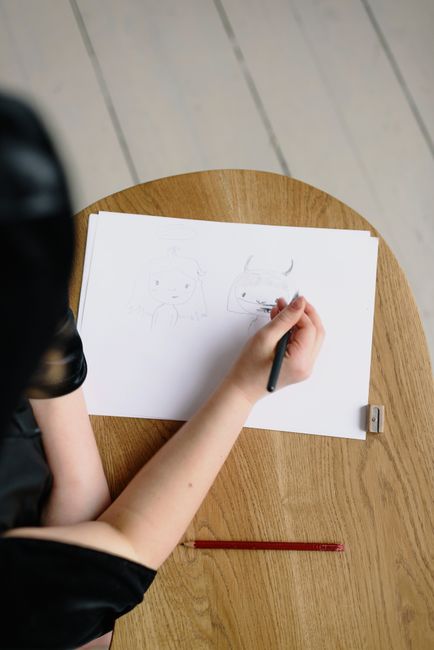
Like any skill, drawing requires consistent practice. Even just 15-30 minutes of drawing each day can make a huge difference. The key is to make it a habit. Find a time that works for you and stick to it as much as possible.
Don't be discouraged if you don't see immediate results. Progress takes time and effort. The most important thing is to enjoy the process and focus on learning and improving. Keep a sketchbook and fill it with your drawings. This will serve as a visual record of your progress and a source of inspiration.
Resources for Aspiring Artists: Where to Learn More

In today's digital age, there's a wealth of resources available to help you learn to draw. Here are a few of my favorites:
- Online Courses: Platforms like Skillshare, Udemy, and Coursera offer a wide range of drawing courses for all skill levels.
- YouTube Channels: Many talented artists share their knowledge and techniques on YouTube. Search for channels that focus on beginner-friendly tutorials.
- Books: There are countless books on drawing techniques, anatomy, and perspective. Visit your local library or bookstore and browse the art section.
- Drawing Apps: Procreate, Adobe Fresco, and other drawing apps can be a fun way to practice your skills on a tablet or smartphone.
- Local Art Classes: Consider taking a local art class or workshop. This is a great way to learn from an experienced instructor and connect with other artists.
Embrace Imperfection: The Beauty of the Artistic Journey

As you embark on your drawing journey, remember to embrace imperfection. Don't be afraid to make mistakes. They are valuable learning opportunities. The most important thing is to have fun and express yourself. Drawing is not about creating perfect replicas. It's about capturing your unique perspective and sharing your vision with the world.
Experiment with different styles and techniques. Don't be afraid to break the rules. Find what works for you and develop your own artistic voice. And most importantly, never stop learning and growing. The world of art is vast and ever-evolving. There's always something new to discover.
So, grab your pencil, open your sketchbook, and let your imagination soar. The world is waiting to see what you create. Happy drawing!
Beyond the Basics: Expanding Your Artistic Horizons

Once you've mastered the fundamentals, it's time to explore new techniques and mediums. This is where your artistic journey truly blossoms, allowing you to personalize your style and delve deeper into the art forms that resonate with you.
- Colored Pencils: Adding color can bring a whole new dimension to your drawings. Experiment with different colored pencil techniques, such as layering, blending, and burnishing.
- Charcoal: Charcoal is a versatile medium that can be used to create dramatic and expressive drawings. Experiment with different types of charcoal, such as vine charcoal and compressed charcoal.
- Pen and Ink: Pen and ink drawing offers a precise and detailed approach. Explore different pen nibs and ink types to create a variety of line weights and textures.
- Watercolor: Watercolor painting is a beautiful and challenging medium. Learn about watercolor techniques such as washes, glazing, and dry brushing.
- Digital Art: Digital art offers a wide range of possibilities. Experiment with different drawing and painting apps on a tablet or computer.
Remember, the key is to experiment and find what you enjoy. Don't be afraid to try new things and step outside of your comfort zone. The more you explore, the more you'll discover about yourself and your artistic potential.
And finally, surround yourself with art! Visit museums, galleries, and art festivals. Immerse yourself in the work of other artists and find inspiration in their creations. The more you expose yourself to art, the more you'll learn and grow as an artist.
The journey of learning to draw is a lifelong adventure. Embrace the challenges, celebrate the victories, and never stop creating. Your art is a unique expression of yourself, and the world is a richer place because of it. Now go forth and create something beautiful!
Post a Comment