Try Expressive Abstract Painting with Botanical Inspiration (2 Intuitive Art Demos)
Try Expressive Abstract Painting with Botanical Inspiration (2 Intuitive Art Demos)
Hello fellow art lovers! Ever feel that pull, that irresistible urge to let your creativity flow freely, unbound by rules and expectations? That's the siren song of expressive abstract painting, and today, we're answering its call with a botanical twist! I'm so excited to share with you a journey into the wild, wonderful world where paint and nature collide. Prepare to ditch perfection and embrace the glorious, messy beauty of intuitive art.
For me, art is more than just technique; it's a conversation with the soul. It's about capturing the essence of a feeling, a memory, a dream, and translating it onto canvas with color, texture, and movement. And what better muse than the botanical world? Think of the intricate veins of a leaf, the vibrant hues of a blooming flower, the graceful sway of a willow tree in the wind. These natural elements are brimming with inspiration just waiting to be unleashed.
So, grab your brushes, gather your paints, and let's embark on this colorful adventure together! I'll guide you through two intuitive art demos, both inspired by the beauty of botanicals, but approached with different techniques and intentions. Get ready to explore, experiment, and most importantly, have fun!
Why Botanical Inspiration for Abstract Art?
You might be wondering, why botanicals? Why not landscapes, portraits, or geometric shapes? Well, here's why I find botanical inspiration so compelling for abstract art:
a. Universality: Flowers, leaves, trees… these are elements that resonate with almost everyone. They evoke feelings of peace, joy, growth, and connection to nature. Tapping into these universal emotions allows your art to connect with viewers on a deeper level.
b. Endless Variety: The botanical world is a never-ending source of inspiration. From the delicate petals of a poppy to the bold structure of a succulent, there's an infinite array of shapes, colors, textures, and patterns to explore.
c. Symbolism: Throughout history, different plants and flowers have held symbolic meanings. Incorporating these symbols into your art can add layers of depth and intrigue. For example, a lotus flower often represents purity and enlightenment, while a sunflower symbolizes adoration and longevity.
d. Organic Forms: The flowing, irregular shapes found in nature are perfect for creating dynamic and visually interesting abstract compositions. They encourage a sense of movement and energy, adding a touch of wildness to your work.
e. Color Palettes: Nature provides the most exquisite color palettes imaginable. From the subtle greens and browns of a forest floor to the vibrant reds and oranges of a sunset, the natural world offers endless inspiration for creating harmonious and evocative color combinations.
Materials You'll Need
Before we dive into the demos, let's gather our supplies. Don't feel pressured to have exactly what I have – use what you have on hand, and remember, experimentation is key!
Acrylic Paints: Acrylics are my go-to for their versatility and quick drying time. I recommend a range of colors, including your favorite greens, blues, yellows, reds, and some neutrals like white, black, and raw umber. Canvas or Heavyweight Paper: Choose a size that feels comfortable for you. I often use 12x16 inch canvases for smaller projects, but feel free to go larger! Brushes: A variety of brushes is helpful. Include some large flat brushes for applying washes, some medium-sized round brushes for details, and maybe even a few smaller liner brushes for fine lines. Palette or Palette Paper: Something to mix your paints on. Water Container: For cleaning your brushes. Paper Towels or Rags: Essential for wiping brushes and cleaning up messes. Optional Supplies: Acrylic mediums (gel medium, glazing medium) Palette knife Spray bottle with water Stencils or texture tools Ink, charcoal, or pastel sticks
Demo 1: Layered Botanical Impressions

This first demo focuses on building up layers of color and texture to create a sense of depth and complexity. We'll be using acrylics and focusing on creating abstract shapes that hint at botanical forms.
- Prepare Your Canvas: Start by applying a thin layer of gesso to your canvas. This will help the paint adhere better. Let it dry completely.
- Establish the Background: Choose a few muted colors for your background. I often use a mix of blues, greens, and grays. Apply the colors in loose, gestural strokes. Don't overthink it – just let the colors blend and mingle.
- Introduce Organic Shapes: Now, using a slightly darker shade, begin to introduce some organic shapes that resemble leaves, petals, or branches. Think about the way these shapes connect and overlap. Use a variety of brushstrokes – long, sweeping strokes, short, staccato strokes, and everything in between.
- Add Texture: This is where things get really interesting! Use a palette knife to apply thick layers of paint in certain areas. You can also use stencils or texture tools to create interesting patterns. Another fun technique is to spray the canvas with water while the paint is still wet, which will create interesting textures and drips.
- Layering and Glazing: Once the initial layers are dry, you can begin to add more layers of color and detail. Use a glazing medium to create translucent layers that add depth and luminosity. Experiment with different colors and techniques to create a rich and complex surface.
- Highlight and Shadow: Add highlights with lighter colors and shadows with darker colors to create a sense of dimension. Focus on areas where the shapes overlap or where you want to draw the viewer's eye.
- Refine and Finish: Step back and take a look at your painting. Are there any areas that need more attention? Do you want to add any final details? Trust your intuition and make any necessary adjustments. Once you're happy with the result, let the painting dry completely.
Remember, the goal is not to create a realistic representation of botanicals, but rather to capture the essence of their form and energy. Let your intuition guide you, and don't be afraid to experiment!
Demo 2: Ink and Watercolor Botanical Dreams

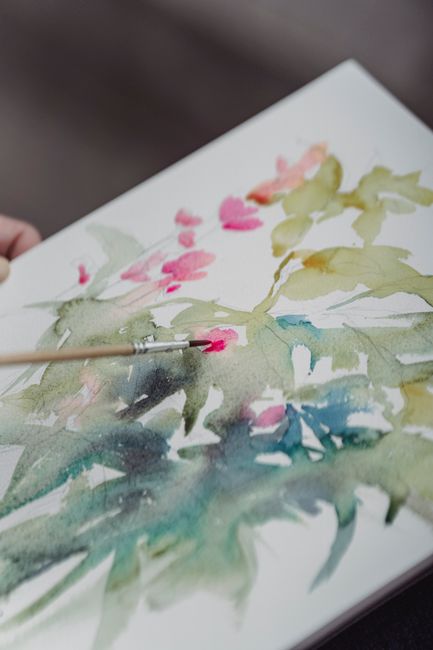
For our second demo, we're switching gears and embracing the fluidity and transparency of ink and watercolors. This technique is perfect for creating ethereal and dreamlike botanical abstractions.
- Prepare Your Surface: For this demo, I recommend using watercolor paper. It's designed to handle the wet media without buckling or warping.
- Ink Outlines: Using a waterproof black ink pen (a fine liner works well), lightly sketch out some simple botanical shapes. Think about the basic forms of leaves, petals, stems, and seed pods. Don't worry about being too precise – the goal is to create a loose framework for your watercolor washes.
- Watercolor Washes: Now comes the fun part! Using a variety of watercolor paints, begin to fill in the shapes with washes of color. Experiment with different techniques, such as wet-on-wet (applying wet paint to a wet surface) to create soft, blended effects, or wet-on-dry (applying wet paint to a dry surface) to create sharper edges.
- Layering and Blending: Continue to layer the watercolors, allowing each layer to dry slightly before applying the next. This will create depth and complexity. Blend the colors together to create smooth transitions and subtle variations in tone.
- Adding Details: Once the watercolor washes are dry, you can add more details with your ink pen. Outline certain areas to define the shapes, or add delicate lines to create a sense of texture. You can also use white ink or gouache to add highlights.
- Splatter and Drip: For an extra touch of whimsy, try splattering or dripping paint onto the paper. This will add a sense of spontaneity and movement to your painting.
- Refine and Finish: Step back and take a look at your painting. Are there any areas that need more attention? Do you want to add any final details? Trust your intuition and make any necessary adjustments. Once you're happy with the result, let the painting dry completely.
This technique is all about embracing the unpredictable nature of ink and watercolors. Allow the colors to flow and blend freely, and don't be afraid to make mistakes. The imperfections are what make the painting unique and beautiful.
Tips for Expressive Abstract Botanical Painting
Here are a few extra tips to help you on your journey into the world of expressive abstract botanical painting:
a. Observe Nature: Spend time observing the natural world. Take walks in the park, visit a botanical garden, or simply observe the plants in your own backyard. Pay attention to the shapes, colors, textures, and patterns that you see.
b. Gather Inspiration: Collect images of botanical subjects that inspire you. These can be photographs, illustrations, or even sketches. Use these images as a starting point for your paintings.
c. Experiment with Color: Don't be afraid to experiment with different color combinations. Try using complementary colors, analogous colors, or even a monochromatic palette. Play around with different values and intensities to create a range of moods and emotions.
d. Embrace Texture: Texture is a powerful tool for adding visual interest to your paintings. Experiment with different techniques for creating texture, such as using a palette knife, stencils, or found objects.
e. Trust Your Intuition: The most important thing is to trust your intuition and let your creativity flow. Don't worry about making mistakes. The beauty of abstract art is that there are no rules!
f. Practice Regularly: The more you practice, the more comfortable you'll become with the techniques and materials. Set aside some time each week to create, even if it's just for a few minutes.
g. Find Your Style: Don't try to copy someone else's style. Experiment with different techniques and approaches until you find what works best for you. Develop your own unique visual language.
h. Don't Be Afraid to Fail: Not every painting will be a masterpiece. That's okay! The important thing is to learn from your mistakes and keep creating. Each painting is a stepping stone on your artistic journey.
i. Enjoy the Process: Most importantly, have fun! Art should be a source of joy and inspiration. Don't put too much pressure on yourself to create something perfect. Just relax, let go, and enjoy the process.
Sharing Your Creations
Once you've created your botanical-inspired abstract paintings, I encourage you to share them with the world! Post them on social media, enter them in art competitions, or even consider selling them. Sharing your art is a great way to connect with other artists and inspire others to create. Use relevant hashtags like #abstractart, #botanicalart, #intuitiveart, #acrylicpainting, #watercolorpainting, #artdemo, #creativeinspiration.
Remember, art is a journey, not a destination. Embrace the process, experiment with new techniques, and most importantly, have fun! I can't wait to see what you create! Happy painting!
Post a Comment