What is Cubism? A Journey into Broken Perspectives and Revolutionary Art

What is Cubism? A Journey into Broken Perspectives and Revolutionary Art
Ah, Cubism! Just the name conjures up images of fragmented faces, deconstructed objects, and a world viewed through a kaleidoscope. It's a movement that shook the foundations of art as we knew it, challenging traditional notions of perspective and representation. But what is Cubism, really? Join me on a journey to explore this revolutionary art movement, understand its nuances, and perhaps even catch a glimpse of the world through a Cubist lens.
A World Before Cubism: The Seeds of Revolution

Before we dive headfirst into the shattered planes of Cubism, let's briefly consider the artistic landscape that preceded it. For centuries, Western art had largely been preoccupied with creating illusions of reality. Renaissance masters perfected perspective, striving to depict the world as accurately as possible on a two-dimensional surface. Impressionism, with its focus on capturing fleeting moments of light and color, softened these rigid rules, but still aimed to represent the observable world.
However, towards the end of the 19th century, artists began to question this mimetic approach. They yearned for something more – a way to express inner feelings, explore abstract ideas, and delve beyond the surface appearance of things. Artists like Paul Cézanne were pivotal, emphasizing geometric forms and structural analysis in his landscapes and still lifes. He sowed the seeds of a revolution, and Cubism was about to blossom.
Enter Picasso and Braque: The Pioneers of Cubism
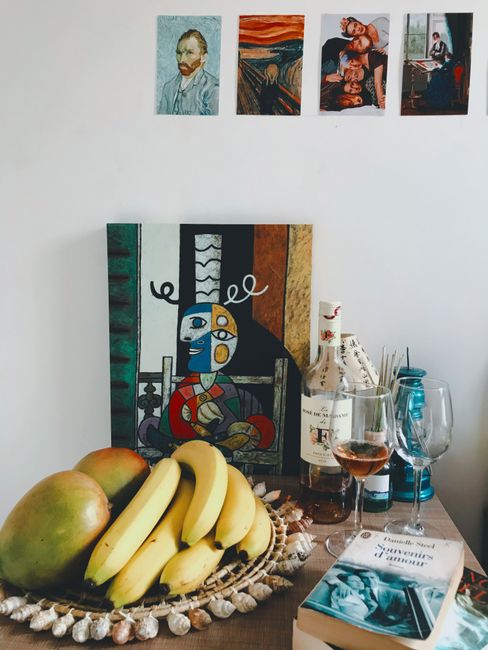
Now, let's talk about the dynamic duo who are almost synonymous with Cubism: Pablo Picasso and Georges Braque. These two artists, working in close collaboration during the early 20th century, are generally credited with developing the style. They weren't just painting pictures; they were inventing a new visual language.
Think of it as a conversation – a visual dialogue. Picasso and Braque would often visit each other's studios, exchanging ideas and pushing the boundaries of representation. They analyzed subjects from multiple angles, breaking them down into geometric forms and reassembling them on the canvas. This wasn't about copying reality; it was about presenting a more complete, multifaceted understanding of the subject.
Understanding the Core Principles of Cubism

Cubism isn't just about making things look broken. It's about a fundamental shift in how we perceive and represent the world. Here are some key principles that define the movement:
- Multiple Perspectives: This is perhaps the most recognizable characteristic of Cubism. Instead of depicting a subject from a single viewpoint, Cubist artists showed it from multiple angles simultaneously. Imagine walking around an object, capturing its different sides, and then flattening those views onto a single canvas.
- Geometric Forms: Cubism favored geometric shapes – cubes, cones, cylinders – as the building blocks of representation. Objects were dissected and reassembled using these forms, creating a fractured, almost sculptural effect.
- Reduced Color Palette: Early Cubism, particularly Analytical Cubism, often employed a limited color palette, typically consisting of browns, grays, and ochres. This was intended to minimize distractions and focus attention on the underlying structure and form. Think muted tones, creating depth through shade and tone instead of vibrant color.
- Fragmentation and Abstraction: Objects were broken down into their constituent parts and then rearranged on the canvas. This fragmentation led to a degree of abstraction, making it sometimes difficult to immediately recognize the subject matter. This abstraction forces the viewer to actively participate in deciphering the artwork.
- Depiction of Time: Some art historians argue that Cubism also aimed to represent the passage of time. By showing multiple perspectives simultaneously, the artist was essentially capturing the subject in motion, over a period of time.
The Two Main Phases: Analytical and Synthetic Cubism

Cubism evolved over time, giving rise to different phases. The two most prominent are Analytical Cubism and Synthetic Cubism:
Analytical Cubism (c. 1908-1912)
This is often considered the "purest" form of Cubism. Analytical Cubism involved a meticulous dissection of the subject, breaking it down into its most basic geometric components. Colors were typically muted, and the overall effect was often monochromatic or near-monochromatic. Think of it as a careful analysis of form and structure, stripping away extraneous details to reveal the underlying essence of the subject.
Key characteristics of Analytical Cubism include:
- Detailed Fragmentation: Subjects are meticulously broken down into small, interlocking facets.
- Monochromatic Palette: Colors are typically limited to browns, grays, and ochres.
- Overlapping Planes: Forms appear to overlap and interpenetrate, creating a sense of depth and spatial ambiguity.
- Difficulty in Recognizing the Subject: The degree of abstraction can make it challenging to immediately identify the subject matter.
Synthetic Cubism (c. 1912-1919)
Synthetic Cubism marked a shift away from the rigorous analysis of Analytical Cubism. Instead of breaking down objects, artists began to construct them from simpler shapes and forms. Colors became brighter, and the use of collage – incorporating real-world materials like newspaper clippings and wallpaper fragments – became common. Synthetic Cubism was less about dissecting reality and more about creating a new reality on the canvas. It's a way of "synthesizing" new forms from recognizable elements.
Key characteristics of Synthetic Cubism include:
- Simpler Shapes: Forms are more simplified and geometric compared to Analytical Cubism.
- Brighter Colors: A wider range of colors is used, adding vibrancy and visual interest.
- Collage Elements: Real-world materials are incorporated into the artwork, blurring the lines between painting and sculpture.
- Easier to Recognize the Subject: The degree of abstraction is reduced, making it easier to identify the subject matter.
Beyond Picasso and Braque: The Spread of Cubism

While Picasso and Braque are undoubtedly the most famous Cubists, the movement attracted a diverse range of artists who brought their own unique perspectives and interpretations. Here are a few notable figures:
- Juan Gris: A Spanish painter and sculptor who developed a distinct style of Synthetic Cubism, characterized by its clarity, precision, and geometric structure.
- Fernand Léger: A French painter, sculptor, and filmmaker who incorporated Cubist principles into his depictions of modern life and technology.
- Robert Delaunay and Sonia Delaunay: Pioneers of Orphism, a related movement that emphasized the use of color and light in Cubist compositions.
The Legacy of Cubism: A Lasting Impact on Art

Cubism's influence on 20th-century art is undeniable. It paved the way for a multitude of abstract and experimental movements, including:
- Futurism: Inspired by Cubism's fragmentation and dynamic composition, Futurism celebrated speed, technology, and the energy of modern life.
- Constructivism: A Russian avant-garde movement that embraced geometric abstraction and functional design, influenced by Cubist principles of form and structure.
- Abstract Expressionism: While seemingly different, Abstract Expressionism, with its emphasis on non-representational forms and emotional expression, owes a debt to Cubism's rejection of traditional representational conventions.
Even today, Cubism continues to inspire artists and designers. Its emphasis on perspective, form, and abstraction remains relevant in contemporary art and visual culture. You can see echoes of Cubism in everything from graphic design to architectural concepts.
Why Cubism Matters: More Than Just Broken Shapes

So, why should we care about Cubism? Because it represents a profound shift in artistic thinking. It challenges us to question our assumptions about reality, perception, and representation. It encourages us to look beyond the surface and explore the underlying structures and forms that shape our world.
Cubism is more than just a style; it's a way of seeing. It invites us to engage with art in a more active and thoughtful way, to decipher the artist's intentions, and to construct our own interpretations. It reminds us that art isn't just about depicting what we see, but about expressing what we feel and what we know.
Experiencing Cubism Today: Where to Find It
If you're eager to immerse yourself in the world of Cubism, here are a few places to start:
- Museums: The Museum of Modern Art (MoMA) in New York City, the Centre Pompidou in Paris, and the Museo Nacional Centro de Arte Reina Sofía in Madrid all have significant collections of Cubist art.
- Online Resources: Explore online art databases and virtual museum tours to discover a wide range of Cubist artworks.
- Art Books: Dive into books and articles about Cubism to deepen your understanding of the movement's history, theory, and key figures.
Finding Your Own Cubist Perspective

But perhaps the best way to understand Cubism is to try it yourself! Experiment with breaking down objects into geometric forms, exploring different perspectives, and creating your own fragmented compositions. You don't need to be a master artist to appreciate the power and beauty of Cubism. All you need is a curious mind and a willingness to see the world in a new and unexpected way.
So, embrace the broken perspectives, celebrate the geometric forms, and embark on your own Cubist adventure. Who knows what you might discover about art, about the world, and about yourself?
Post a Comment